
Engineering Out the Noise: The BBC and Abbey Road Legacy
Posted by The Sound Organisation on Jul 7th 2026
At the recent Hi-Fi Show in Portugal, Chord Electronics' Colin Pratt sat down with the show organizers to discuss the upcoming Quartet upscaler, as well as broader overview of Chord Electronics history and position in the audio industry. Colin was proud to officially introduce the new Quartet, a product that has been in the works for over 8 years. Building upon the M Scaler, the new Quartet brings over five times the processing power and a tenfold increase in digitial performance for a true reference-level upscaler. The Quartet pairs perfectly with line mates the Dave DAC and Etude Amplifier, and represents a massic adnvancement in the ability to recreate analog waveforms from digital signals.
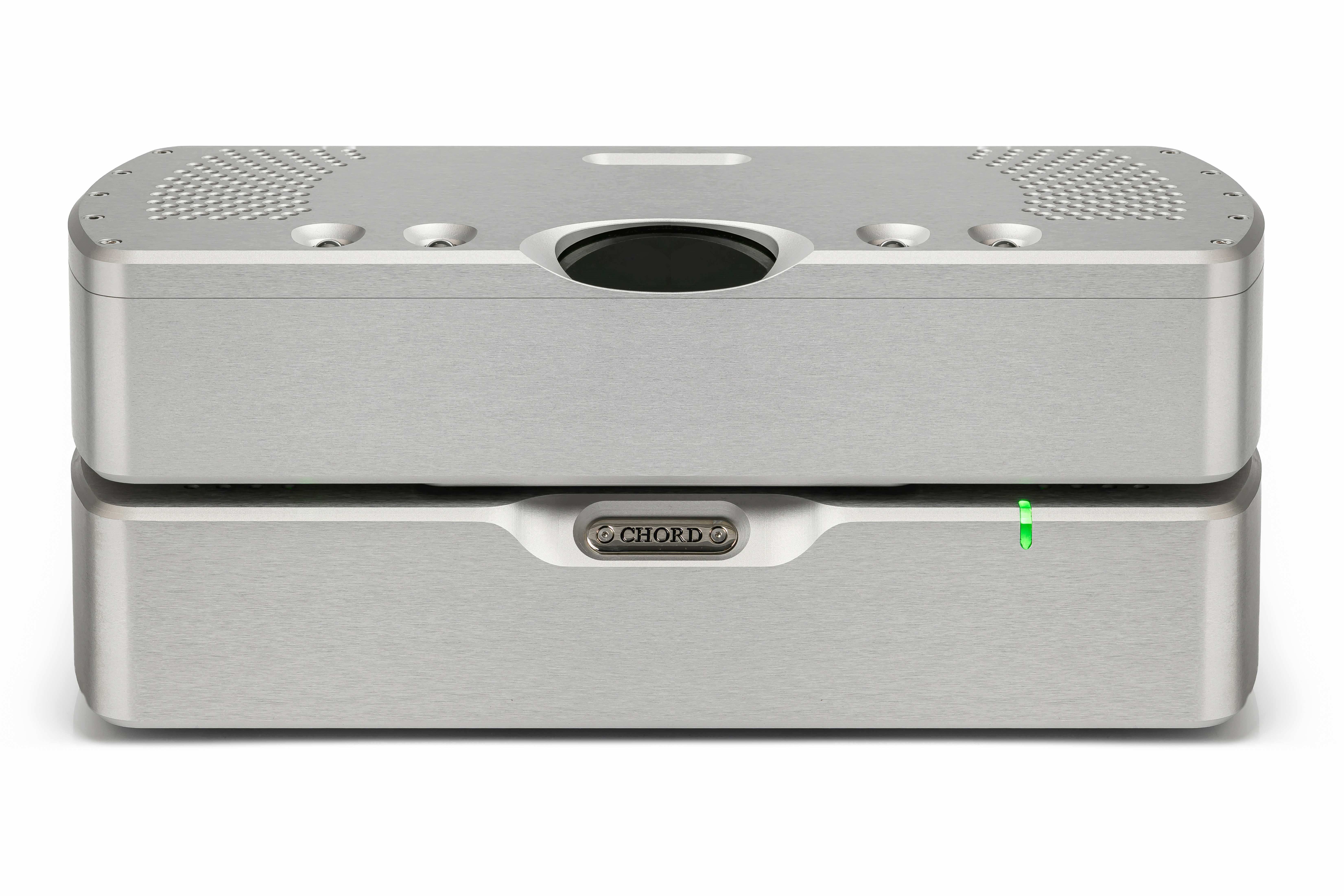
Chord Electronics Is Trusted by The Best
Beyond their digital breakthroughs, Chord’s design ethos has been anchored in custom analog power delivery since founder John Franks started the company in the late 1980s. Rather than adding bulky outboard filters or multiple chassis to clean up grid interference, Franks pioneered ultra-fast, high-frequency switch-mode power supplies engineered to handle noise right at the root. This specialized filtering caught the attention of the BBC in the early '90s, who required amplification that remained absolutely consistent and unswayed by peak-hour power fluctuations on the electrical grid.
Once Chord earned its stripes with the BBC, the commercial studio world quickly followed. Pratt proudly revealed a definitive badge of honor: Abbey Road Studios actively purchases Chord Electronics equipment outright. Rejecting the industry practice of giving away free gear for promotional placement, Chord preserves its sonic credibility by ensuring elite engineering spaces buy their hardware purely for its performance. In fact, Abbey Road mixing and mastering engineers recently overhauled their reference rooms to transition directly to Chord's state-of-the-art ULTIMA dual-feed-forward topology.
This studio legacy extended across the Atlantic in the early 1990s when the studio director for Lucasfilm’s Skywalker Studios discovered Chord while working on a project at Abbey Road. Looking to resolve ongoing disputes among her engineers regarding which amplifiers delivered the truest translation of a mix, she shipped Chord stacks to their California headquarters.
The evaluation was immediate: The Phantom Menace became the very first Star Wars film mixed entirely on Chord Electronics amplification. That relationship spans decades; Skywalker Sound has similarly upgraded their multi-zone scoring and mixing architecture to ULTIMA tech, processing every modern Lucasfilm, Disney, and Pixar soundtrack through a Chord signal chain. It is this exact master-tape lineage that attracts iconic, purist artists like Neil Young—who relies on the compact Mojo 2 and tabletop Hugo systems to accurately replicate the raw, unfiltered emotional delivery of his original studio tracking sessions.
The Quest for Sonic Authenticity and Consumer Value
Towards the end of the interview, Colin is asked about what differentiates Chord Electronics from other high-end audio equipment suppliers, especially those from the United Kingdom. To begin, Chord Electronic is not concerned with what other manufacturers do and focuses on the technologies that have proven themselves. A major design philosophy for Chord is to not add peripherals or technology on top of the noise floor, but engineer their equipment to remove or lower the floor. This is not an inexpensive strategy and requires better components along with additional engineering and development. This leads to criticisms of their price.
"Value is only in the eye of the purchaser," Pratt notes, addressing the industry's obsession with price-to-performance metrics. "Our goal is to build long-term consumer durables that stay in a listener's system for years without needing small, incremental upgrades."
In the end, the listener decides if the improvement in their audio fidelity and sonic authenticity is worth the outlay. While many of Chord Electronics' offerings sit toward the higher end, the audio improvement and longevity of the products make them a long-term investment.
The Final Word
By focusing on deep technical integrity, structural longevity, and an unwavering respect for the original performance, Chord Electronics continues to plow its own unique furrow in high-end audio. Whether driving elite monitor arrays at Abbey Road or sitting elegantly on a high-fidelity desktop setup at home, the combination of John Franks’ fast analog dynamics and Rob Watts’ industry-defining digital filtering ensures that every layer of musical emotion is delivered exactly as it was captured.